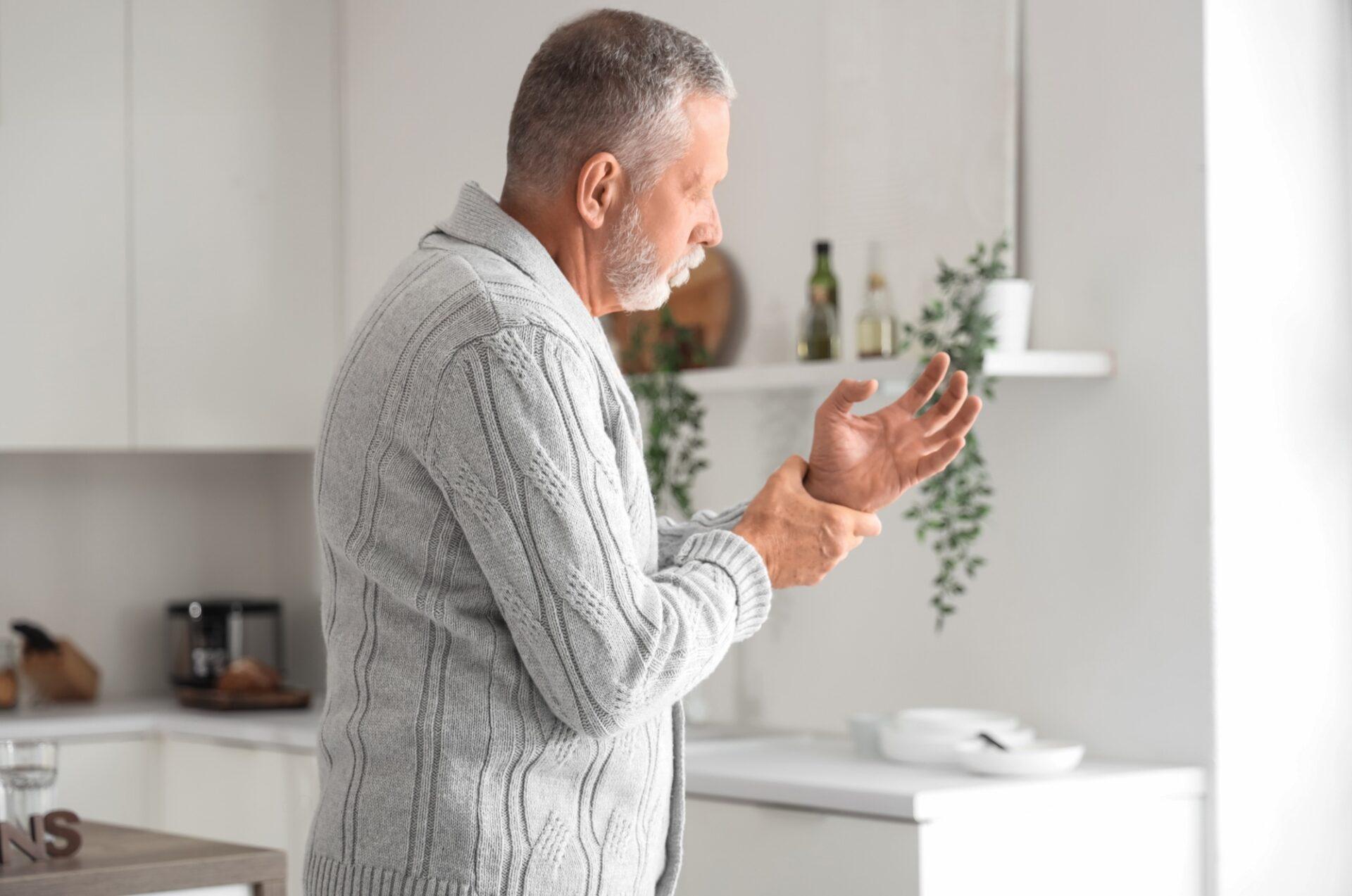
For many people living with Parkinson’s disease, there may come a time when symptoms begin to change. Stiffness may increase, tremor may become more noticeable, or walking may feel more difficult than before.
When this happens, it can be worrying. Many people immediately fear that the condition is progressing rapidly.
In reality, a sudden change in symptoms is often caused by something temporary or treatable rather than the disease itself. Identifying what is driving the change is usually the first step towards improving symptom control.
The next step is to work out what might be driving the change, and what can be done to bring symptoms back under better control.
What can make Parkinson’s symptoms worse?
In Parkinson’s disease, symptoms can worsen due to both intrinsic and extrinsic factors.
Intrinsic factors relate to changes occurring within the body. These include:
- Infection
- Poor sleep
- Dehydration
- Constipation
- Pain
- Missed or delayed medication doses
- Interactions with other medications
As Parkinson’s progresses, some people also develop motor fluctuations, where symptoms temporarily worsen as the effect of medication wears off, even without an obvious trigger.
Extrinsic factors are external influences that place additional strain on the nervous system. These include:
- Psychological stress
- Travel
- Changes in routine
- Fatigue
- Major life events or social occasions
Identifying whether symptoms are being driven by intrinsic or extrinsic factors is important. Addressing the underlying cause often leads to significant improvement and helps guide appropriate treatment adjustments.
Why are my symptoms getting worse suddenly?
Sudden worsening of Parkinson’s symptoms is often due to a reversible trigger rather than true disease progression.
Common causes include:
- Infection
- Missed or delayed medication doses
- Poor medication absorption
- Dehydration
- Another intercurrent medical problem
In the later stages of Parkinson’s disease, motor fluctuations may also develop. These can lead to:
- Wearing-off of medication effects
- Increased stiffness
- Freezing of gait
- Fluctuations in mobility
These changes can often be proactively managed or even prevented with regular specialist review, appropriate adjustment of medication type and timing, and supportive strategies such as cueing techniques, counting, rhythmic prompts, and physiotherapy.
Prompt medical assessment helps identify the cause and restore symptom control, reducing unnecessary disability and distress.
How do I know if my current treatment is no longer working?
It can be worrying to feel that your treatment is no longer working. However, these changes are common in Parkinson’s disease and are often very manageable.
Signs that treatment may need reviewing include:
- Medication wearing off before the next dose
- Increased stiffness or tremor
- Slowing of movement
- Freezing episodes
- More frequent falls
- The appearance of involuntary movements
Importantly, these symptoms do not mean that treatment has failed or that nothing more can be done.
In many cases, they reflect the need for adjustments in medication timing, dose or type, or the addition of supportive therapies such as physiotherapy or occupational therapy.
Parkinson’s symptoms change over time, which is why regular review with a neurologist experienced in Parkinson’s disease is important. Ongoing specialist follow-up allows treatment to be adapted so that symptom control and quality of life can be maintained.
When should I update my medication plan?
Medication changes are a normal and expected part of living with Parkinson’s disease.
Needing an adjustment does not mean you have done anything wrong or that your condition has suddenly worsened.
Any sustained change in symptoms, new side effects, or increasing difficulty with daily activities should prompt a review with your neurologist.
Medication should also be reviewed as part of regular follow-up with a Parkinson’s specialist, ideally every four to six months, even if symptoms feel relatively stable. Parkinson’s disease changes gradually over time, and medications often need to be adapted to match these changes.
Regular review allows treatment to be fine-tuned proactively, helping to maintain symptom control, minimise side effects and support the best possible quality of life.
What should I do if I’m getting more stiffness, falls, or freezing episodes?
If you notice increasing stiffness, more frequent falls, or episodes of freezing, it can feel unsettling. However, these symptoms are common in Parkinson’s disease and are often treatable.
The most important step is to contact your Parkinson’s specialist or neurology team for review rather than trying to manage these changes alone.
Prompt specialist assessment allows medication to be adjusted and supportive therapies to be introduced where needed.
These may include:
- Physiotherapy
- Balance training
- Gait strategies
- Falls prevention measures
With timely review and a coordinated approach, many people experience meaningful improvement in mobility and a reduction in falls and freezing episodes.
What to take away
When Parkinson’s symptoms worsen, it does not automatically mean the condition is progressing rapidly.
In many cases, there is an identifiable and treatable trigger.
With regular specialist follow-up, appropriate medication adjustments and multidisciplinary support, symptom control can often be restored and quality of life maintained.
About the author
Dr Kit Wu is an award-winning Consultant Neurologist specialising in movement disorders and general neurology, practising at King’s College Hospital NHS Foundation Trust and The Wellington Hospital. She is a member of the Parkinson’s Disease Centre of Excellence at King’s College Hospital, one of only two centres in the UK recognised for excellence in Parkinson’s care and research. Dr Wu holds a PhD in Neurosciences from Imperial College London and is recognised for her work improving access to healthcare for diverse communities.
Find the right specialist for you. Doctify uses verified reviews so you can make the best decision for your healthcare.