Many patients come to see me because they have started noticing changes in their skin and wonder whether years of sun exposure may be responsible.
Sun damage often begins with new pigmentation, rough or scaly patches, broken blood vessels on sun-exposed areas, or fine lines that seem to appear suddenly. Patients frequently ask the same question: “Is this sun damage, and is it permanent?”
Sun exposure plays an important role in our health. It supports vitamin D production and can improve mood and wellbeing. However, repeated low-level exposure to ultraviolet, or UV, radiation over many years can gradually affect the structure and appearance of the skin.
One important thing to understand is that sun damage is cumulative. The effects build slowly over time and may only become visible years, or even decades, after the exposure that caused them.
Some changes can improve significantly with the right treatments, while others are more difficult to fully reverse. Understanding what sun damage looks like, and what can realistically be improved, can help guide the next steps.
What does sun-damaged skin actually look like?
Sun damage does not always appear as obvious sunburn. In many cases, the changes develop gradually after years of repeated UV exposure.
In clinic, I often see several common signs of sun-damaged skin.
Signs of sun-damaged skin can include:
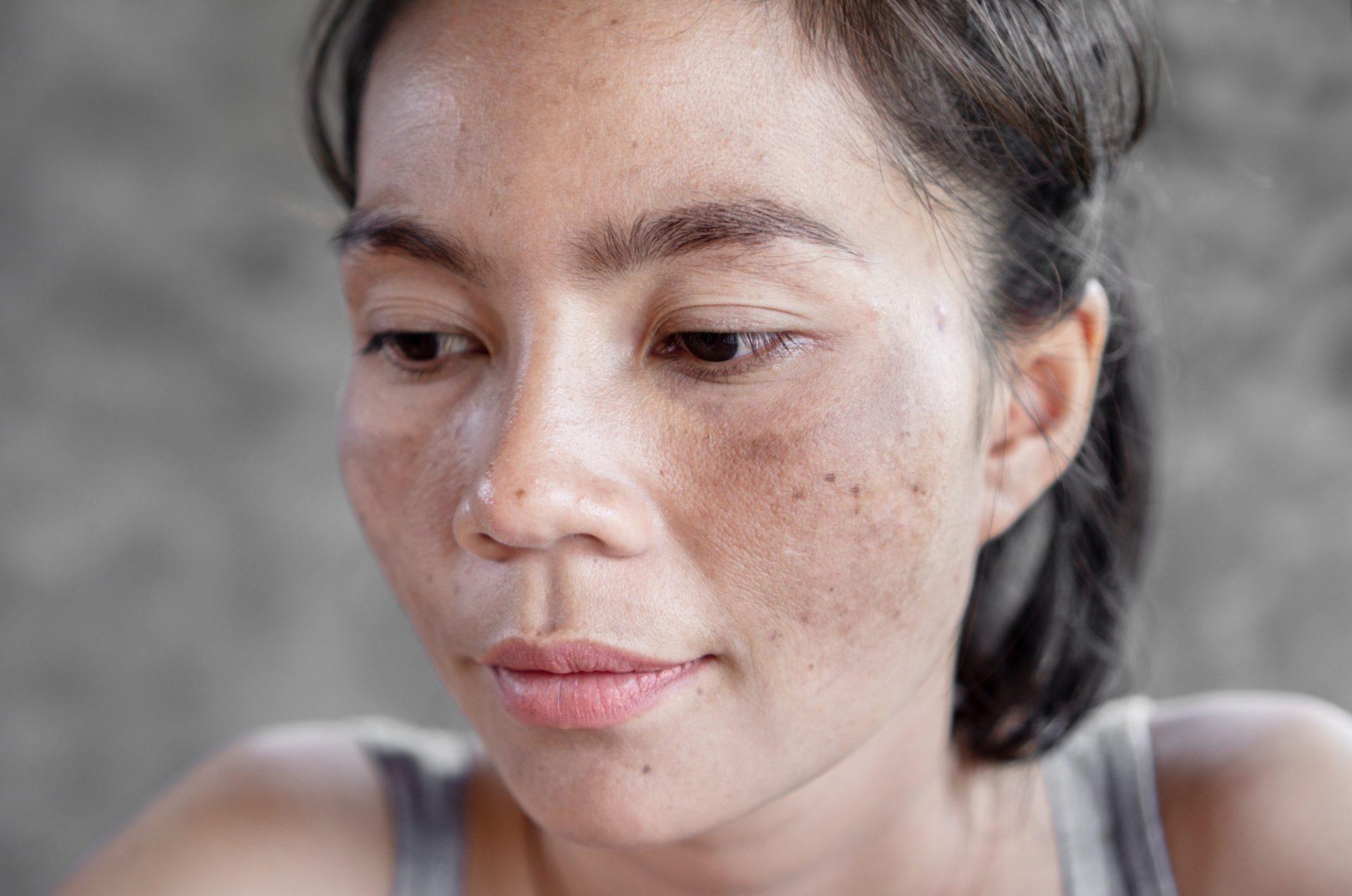
- Pigmentation changes, such as sun spots or solar lentigines
- Uneven or patchy skin tone
- Rough or leathery skin texture
- Visible broken capillaries, particularly around the nose and cheeks
- Fine lines and wrinkles caused by premature skin ageing
One of the most visible signs is solar lentigines, often referred to as sun spots or age spots. These appear as flat brown patches and commonly develop on areas that receive the most sun exposure, including the face, chest, shoulders and backs of the hands.
Over time, ultraviolet radiation can also affect the deeper structure of the skin. This process, known as photoageing, breaks down collagen and elastin, the proteins that keep the skin firm and resilient.
As a result, the skin may gradually develop fine lines, wrinkles, loss of elasticity and thickening. In fair skin types, it may also take on a slightly yellow colour. When deeper sun damage is examined under a microscope, it appears as solar elastosis, which is the breakdown of collagen fibres in the middle layer of the skin.
Often, these changes appear together rather than individually.
Is sun damage permanent or can it be reversed?
This is one of the most common questions patients ask.
The answer depends largely on how deep the damage goes.
Some surface-level changes caused by sun exposure can improve significantly with treatment. Pigmentation, uneven skin tone and certain texture changes can often be lightened or smoothed with the right skincare and procedures.
However, deeper structural damage is more difficult to fully reverse. When UV radiation breaks down collagen and elastin over many years, the skin gradually loses elasticity and strength. Treatments can stimulate new collagen production and improve the appearance of the skin, but they cannot completely restore it to the way it was before the damage occurred.
What I often explain to patients is that the goal is not to make the skin look as if it has never seen the sun. Instead, we aim to:
- Improve overall skin quality
- Soften visible signs of damage
- Stimulate collagen renewal
- Prevent further deterioration
One thing that often surprises patients is how much improvement we can achieve once the right treatment plan is in place.
What treatments actually help sun-damaged skin?
The most effective approach depends on the type and severity of sun damage. In many cases, the best results come from combining treatments that target different aspects of skin ageing.
Some of the treatments I commonly recommend include:
Oral niacinamide
High-dose oral niacinamide, also known as vitamin B3, has been shown in high-quality trials to reduce the progression of sun damage to skin cancer and is relatively low risk.
I recommend this only after a thorough holistic assessment, including a review of the patient’s full medical history. For patients I feel may benefit, I recommend the “no flush” variety to help prevent skin cancer and treat sun damage.
Topical retinoids
Retinoids increase skin cell turnover and stimulate collagen production. Over time, they can help improve fine lines, uneven pigmentation and skin texture.
Retinoids are not suitable for everyone, as they can cause irritation and discomfort, particularly in people with dry or sensitive skin.
Chemical peels
Chemical peels remove the outer layers of damaged skin and encourage new skin cells to replace them. They can improve pigmentation, texture and early signs of photoageing.
IPL
IPL, or intense pulsed light, treatments are particularly effective for pigmentation and redness. They are commonly used to treat sun spots and visible blood vessels.
Fractional laser treatments
Fractional lasers create tiny controlled injuries in the skin. This stimulates collagen production and skin renewal. They can improve wrinkles, pigmentation and overall skin texture.
Prescription treatments for pigmentation
I often use prescription-strength formulations to treat pigmentation and other aspects of sun damage, alongside regular sun protection and skin monitoring.
In practice, a personalised treatment plan tailored to the individual’s skin and concerns usually delivers the best results.
Can sun damage turn into skin cancer?
This is an important question, and one that should never be overlooked.
Long-term sun exposure is the main preventable risk factor for several types of skin cancer, including basal cell carcinoma, squamous cell carcinoma and melanoma. We are also growing in our understanding of the genetic factors involved in skin cancer, which is why I carry out a thorough assessment of genetic risk during consultations in my practice.
Some areas of chronically sun-damaged skin may also develop actinic keratoses. These appear as rough, scaly patches and are considered precancerous lesions, meaning they have the potential to develop into squamous cell carcinoma if left untreated.
As someone who regularly treats skin cancers in my practice, I always encourage patients to have any suspicious skin changes assessed early. I also empower my patients by educating them on the importance of monthly skin self-checks.
You should seek medical advice if you notice:
- A rough or scaly patch that does not heal
- A spot that bleeds or crusts
- A mole that changes in size, colour or shape
- A lesion that looks different from others on your skin
Early diagnosis is extremely important, and most skin cancers are highly treatable when detected early.
How can I prevent further sun damage from now on?
Even if sun damage has already occurred, protecting your skin from further ultraviolet exposure can make a meaningful difference.
Some simple steps can help reduce ongoing damage.
Protecting your skin from UV exposure includes:
- Using sunscreen daily, ideally a broad-spectrum SPF 30 or higher
- Reapplying sunscreen every 2 hours when outdoors
- Reapplying sunscreen every 40 minutes when in water or doing an activity that makes you sweat
- Wearing protective clothing, including wide-brimmed hats and sunglasses
- Seeking shade during peak UV hours, typically between late morning and mid-afternoon
- Checking your skin regularly for new or changing lesions
While we cannot completely erase years of sun exposure, consistent sun protection and targeted treatments can significantly improve the health and appearance of the skin over time.
About the author
Dr Sweta Rai is a Consultant Dermatologist and dermatological surgeon specialising in skin cancer diagnosis, Mohs micrographic surgery and cosmetic dermatology. She practices at King’s College Hospital NHS Foundation Trust and The Harley Street Clinic in London, where she provides expert care for skin conditions and treatments including mole checks, skin cancer screening, botulinum toxin, dermal fillers, laser treatments and chemical peels.
Find the right specialist for you. Doctify uses verified reviews so you can make the best decision for your healthcare.